UC San Diego TREDS Publishes Two Landmark Studies on Truck Driver Safety in Traffic Injury Prevention
San Diego, CA — In 2022 alone, nearly 6,000 people were killed in U.S. crashes involving large trucks, according to the National Highway Traffic Safety Administration. To address this issue, the Transportation Research and Education for Driving Safety (TREDS) Center at UC San Diego has published two groundbreaking studies in the peer-reviewed journal Traffic Injury Prevention, highlighting safety concerns and innovative solutions for commercial motor vehicle (CMV) drivers.
“Commercial drivers keep our economy moving, and their safety is public safety,” said Dr. Linda Hill, TREDS Director and co-author of both studies. “These studies point the way toward smarter, more effective strategies to protect drivers, road workers, and everyone who shares the road.”
Both studies were funded by the Federal Motor Carrier Safety Administration and highlight how advanced technologies such as AI for data collection and telematics-based alerts can help address the rising toll of CMV-involved crashes.
The first study, Prevalence of high-risk behaviors among commercial motor vehicle drivers measured using artificial intelligence for naturalistic data collection, used AI-powered roadside cameras to observe more than 160,000 CMVs driving in San Diego County. Researchers found that nearly 11% of CMV drivers engaged in unsafe behaviors, including speeding, handheld phone use, or not wearing seatbelts. Speeding was the most common violation, particularly during early morning hours and weekends.
“These findings highlight the everyday risks that drivers face on our roads,” said Dr. Ryan Moran, PI and Co-Director of TREDS. “By leveraging artificial intelligence, we can capture a clearer picture of real-world behaviors to help inform and design targeted interventions that save lives.”

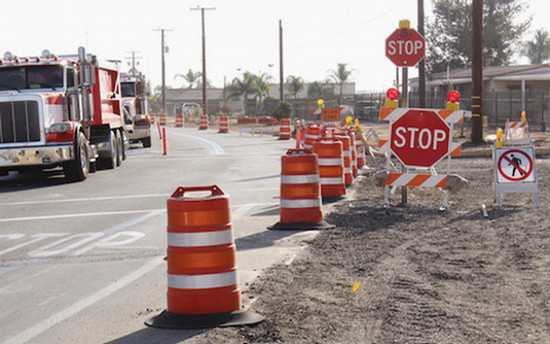
The second study, Real-time driver alerts to improve CMV safety in California work zones: a naturalistic study, tested in-cab alerts warning drivers approaching active highway work zones against a control group who did not receive alerts. Analyzing more than 228,000 vehicle visits at 4,080 work zones across California, the study found that drivers receiving alerts slowed down significantly more than those that did not receive alerts. A companion survey confirmed strong driver support, with 82% reporting that they slowed down and 83% saying that they paid closer attention after receiving alerts.
“Work zones are among the most risky environments for truck crashes,” said Dr. Linda Hill. “Our research shows that real-time alerts are not only effective at changing behavior but also welcomed by drivers themselves.”